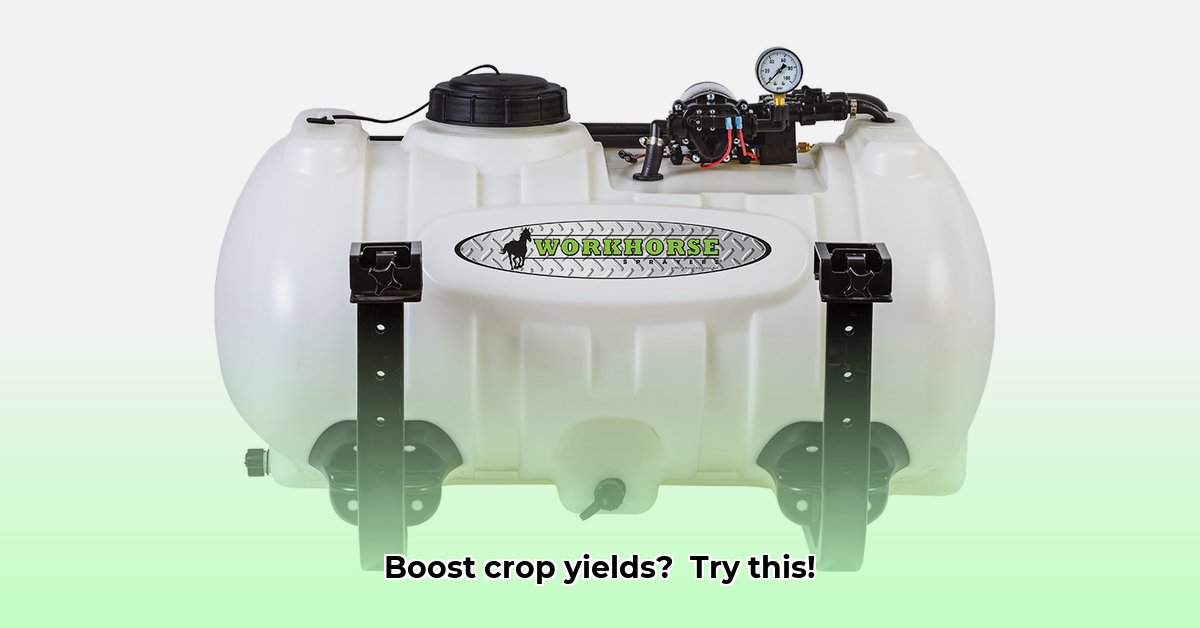
Understanding Pressure Tanks for Efficient Irrigation
Let's face it: watering crops efficiently can be tricky. A well-designed irrigation system is crucial for maximizing yields and conserving water, and that's where pressure tanks become indispensable. Think of a pressure tank as the steady hand guiding your irrigation system, providing consistent water pressure even when your pump isn't constantly running. This guide helps you navigate the world of pressure tanks, empowering you to make informed decisions and optimize your irrigation system at Tractor Supply. For added efficiency, consider maintaining your equipment.
Choosing the Right Pressure Tank: A Step-by-Step Guide
Selecting the right pressure tank for your needs is paramount. A poorly sized tank can lead to inconsistent watering, wasted water, and even damage to your irrigation system. Before heading to Tractor Supply, carefully assess your system's requirements. What size is your garden or field? What type of irrigation system do you use? (Drip, sprinkler, soaker hoses?) Answering these questions is the first step towards finding the perfect fit.
Understanding Your Water Needs: More Than Just a Hose
Before buying, assess your irrigation specifics. A tiny backyard garden has vastly different needs than a large field. Consider these key factors:
- Garden/Field Size: Larger areas naturally require larger tanks.
- Plant Type: Water-intensive crops need more frequent and substantial watering.
- Soil Type: Sandy soil drains faster than clay, influencing tank size estimations.
- Climate: Hot, arid climates necessitate larger tanks for consistent watering.
Don't underestimate the importance of this pre-purchase analysis. It's like choosing the right size watering can – a small can for a few plants, and something much larger for a row of thirsty tomatoes.
Deciphering the Specs: PSI and Gallons
Pressure tanks are defined by two crucial metrics: PSI (pounds per square inch) and gallons. PSI indicates the water pressure within the system. Higher PSI generally translates to a stronger water flow, but it can also stress the system. Gallons show the tank's storage capacity. A larger tank minimizes pump cycles, conserving energy and ensuring consistent water pressure.
Finding the optimal balance is key. Too little pressure, and your plants suffer. Too much, and the system may risk damage.
Sizing Your Tank: A Practical Approach
Let's translate your needs into tank specifications. Here's a step-by-step approach:
- Assess Water Demand: Estimate your hourly water usage (gallons/hour).
- Determine Pump Capacity: Find your pump's GPM (gallons per minute) rating. Your pump must exceed or match your estimated demand.
- Estimate Run Time: How long does your irrigation system usually operate?
- Calculate Required Tank Size (Simplified): Tank Size (gallons) ≈ (GPM x Run Time (minutes)) x 2 (The "x2" provides a buffer for pressure variations).
- Consider Future Growth: Allow for expansion; buying a slightly larger tank now minimizes future upgrades.
- Consult Tractor Supply's Catalog: Use their online filters (PSI, gallons) to find suitable tanks.
Beyond the Numbers: Tank Material Matters
Pressure tanks typically use steel or plastic. Steel offers superior durability but adds weight and may not be the most environmentally friendly. Plastic tanks are lighter and potentially easier to recycle but might have a shorter lifespan. Consider which material best aligns with your long-term sustainability goals. "Choosing the right tank material is a key aspect of environmentally conscious farming," explains Dr. Emily Carter, Agricultural Engineer at the University of California, Davis.
Installation and Maintenance: Ensuring Longevity
Proper installation and routine maintenance are crucial for maximizing your tank's lifespan. Always follow the manufacturer's instructions.
Installation Steps: A Quick Guide
- Safety First: Turn off the water supply before beginning installation. Safety is paramount.
- Gather Tools: You'll need basic plumbing tools (wrenches, sealant).
- Prepare the Site: Ensure a level and stable surface.
- Connect the Tank: Carefully attach the tank to the pump and irrigation lines.
- Prime the System: Fill the tank to remove air bubbles and check for leaks.
- Thorough Testing: Turn the water back on and inspect for leaks.
Maintenance: Your Tank's Best Friend
Regular inspections prevent small problems from turning into large ones. Think of it like regular car maintenance – it's proactive, rather than reactive.
- Inspect for Leaks: Regularly check all connections and the tank itself.
- Check Your Pump: Ensure it's operating efficiently.
- Periodic Lubrication: Lubricate any moving parts indicated by the manufacturer.
Troubleshooting: Addressing Common Issues
Even with meticulous planning, problems can arise.
- Low Pressure: Check the filter, pump, and connections for blockages or leaks.
- Leaks: Tighten connections; replace damaged seals or valves if necessary.
- No Water Flow: Verify power to the pump and that the water supply is on.
Sustainability and Your Pressure Tank: A Long-Term Vision
Choosing the right pressure tank is a sustainability investment. Efficient irrigation conserves water, a precious resource, especially in drier climates. A well-maintained pressure tank significantly reduces water usage, leading to cost savings and environmental benefits. Consider the long-term environmental impact of the chosen material. “Investing in durable, potentially recyclable tanks minimizes long-term environmental impact,” notes John Miller, Sustainable Agriculture Consultant, USDA.